
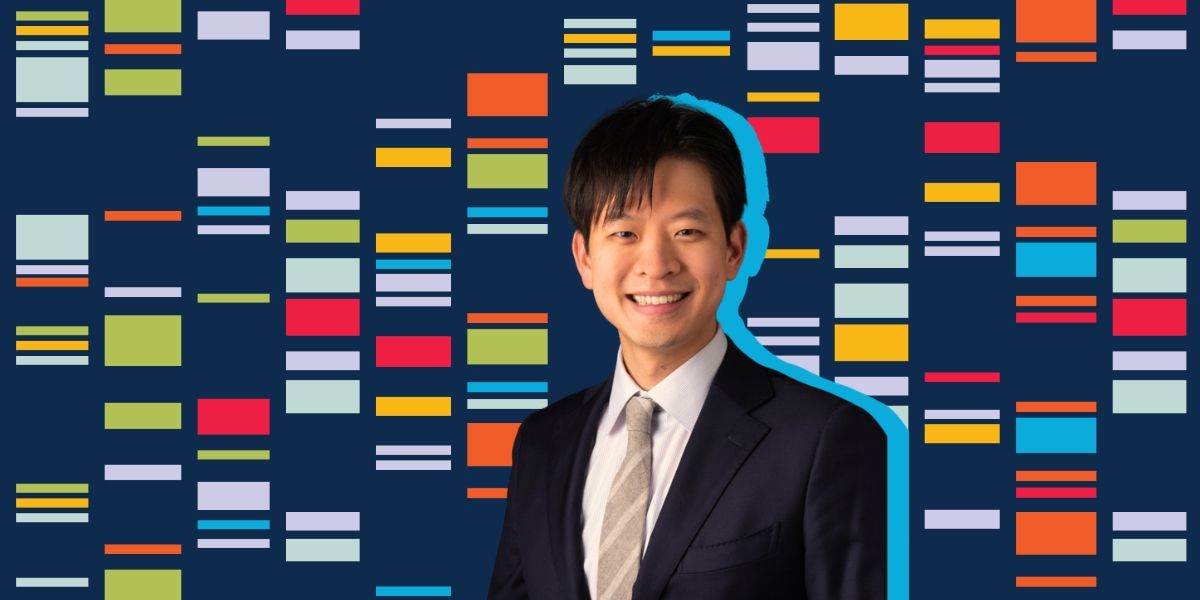
New Gastric Cancer Foundation Seed Grant Recipient Aims to Advance AI in Early Detection
Many patients with benign lesions in the stomach such as gastric intestinal metaplasia or low-grade dysplasia face a risk of developing gastric cancer, but predicting who faces the highest risk is challenging. Pathologists typically examine two-dimensional sections of tissue biopsies, which may not fully reveal subtle changes in lesions that can cause them to become cancerous.
Andrew Song, PhD, assistant professor in translational molecular pathology at University of Texas MD Anderson Cancer Center, aims to shift the paradigm of predicting gastric cancer risk from two dimensions to three. Gastric Cancer Foundation has awarded a $100,000 seed grant to Song, who is using artificial intelligence (AI) to develop a 3D framework for improving the methods pathologists use to predict which stomach lesions are most likely to progress to cancer.
Traditional 2D technologies often miss critical factors that can drive the progression from benign lesion to gastric cancer, including the tumor microenvironment and protein-expression patterns, Song said. “There are 3D microscopes that allow pathologists to precisely image lesions at high resolution, and even characterize individual cells with high accuracy, but the software technology hasn’t quite caught up,” he said. “My goal is to generate 3D data and use it to devise a computation framework that can extract and digest all the heterogeneous information spread across the entire lesion, so pathologists can better predict the risk of progressing to aggressive forms of gastric cancer.”
Song has three main goals for his research. First, using data from a cohort of MD Anderson patients who progressed from benign lesions to gastric cancer, his team will construct a 3D atlas of precursor lesions reflecting markers known to drive that progression. They will then use the atlas to train AI models to recognize cancerous patterns in lesions. Second, they will fine-tune the model, so it is optimized to predict progression to gastric cancer, thereby identifying potential high-risk progressors. The last stage will involve validating the 3D AI framework and establishing a strategy for effectively applying the technology to gastric lesion biopsies.
Song brings to his project a strong background in engineering and pathology. He earned his bachelor, master and PhD degrees in electrical engineering and computer science from the Massachusetts Institute of Technology. He completed a fellowship in computational pathology at Brigham and Women’s Hospital in Boston in 2025 before joining MD Anderson earlier this year. Having grown up in South Korea, where gastric cancer rates are high, Song was especially motivated to apply his skills to improving early detection of the disease. “I believe AI has the potential to revolutionize patient care, especially in gastric cancer,” he said. “There is a lot of risk involved in making sure these models work reliably and can actually be translated to clinical care, but the potential reward is huge.”
The Gastric Cancer Foundation’s seed grant program was established to help fill the funding gap facing early-career gastric cancer researchers who are pursuing high-risk, basic research aimed at bringing novel diagnostics and treatments to patients. Our goal is to provide the support they need to gather preliminary data, which they can then use to apply for larger grants to further advance their projects.
Song appreciates the Gastric Cancer Foundation’s donors for supporting his research, he said.
“I’m immensely grateful for the individual contributions that make these grants possible. This grant is really a godsend, because it will help unlock the initial insights we need to move forward. This is just the beginning of realizing our goal to get 3D pathology to the point where it can really help future patients.”


