
Gastric Cancer Registry Leverages AI and Other Tech Advances to Power Growth
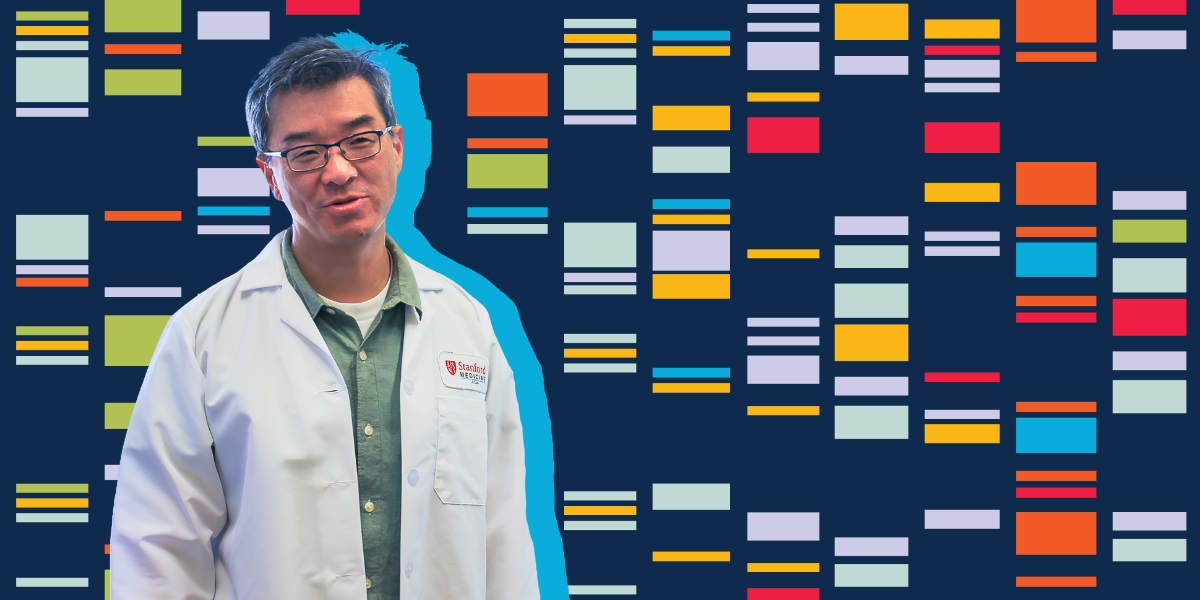
As 2026 draws to a close, the Gastric Cancer Registry’s primary investigator, Hanlee Ji, MD, is enthusiastic about the potential for artificial intelligence (AI) and other new technologies to enhance what has become an essential research tool in the fight against the disease. Since its launch 15 years ago by the Gastric Cancer Foundation, the registry, housed at Stanford University, has become one of the most comprehensive repositories of data about people with stomach cancer. That data will be even more useful with the integration of technology advances, Ji predicted.
“The interest in gastric cancer research is as high as I’ve ever seen it,” said Ji, professor of medicine (oncology) at Stanford’s School of Medicine. “We’re seeing an increasing number of projects being launched that could leverage the resources and the information provided by the registry. All of that has been supported by the Gastric Cancer Foundation.”
The registry and its Genome Explorer portal charted several accomplishments in 2026, including:
- Total cumulative enrollment in the registry jumped nearly 20% to 1,611 patients, with some of that growth driven by collaborations in Brazil, Chile and Mexico. The registry now contains a total of 1,325 gastric cancer samples.
- Two new resources will be added to the Genome Explorer, one containing single-cell genomics data and the other focusing on spatial transcriptomics.
- The Gastric Cancer Registry team published several articles in major publications including Cancer Research and the Journal of Clinical Oncology, and their research was featured prominently at major oncology conferences, including the American Association for Cancer Research 2026 Annual Meeting and ASCO Gastrointestinal Cancers Symposium.
Ji and his colleagues are currently focused on a study that leverages registry data to compare the two major types of the disease, diffuse gastric cancer and non-diffuse gastric cancer. The registry team expects to present data from that study at the ASCO GI Cancers Symposium early next year. In 2027, Ji’s team will focus largely on incorporating AI into the registry. One tool they’ve been working on can be used to scan tissue samples from tumor biopsies and convert the images
into “spatial maps.” These maps describe the characteristics of individual cells and show how they are positioned in tumors. “We’ll end up with a huge public resource of data showing new properties of gastric cancer,” which could, in turn, lead to the discovery of new biomarkers and therapy targets. AI can accomplish this more quickly and less expensively than what would be possible with human pathologists working on their own, Ji added.
The Gastric Cancer Foundation is pleased to announce that we have awarded a new $100,000 grant this year to support the critical work of the Gastric Cancer Registry under the direction of Hanlee Ji, principal investigator. “The Gastric Cancer Registry is helping us better understand gastric cancer, accelerate progress and foster collaboration in gastric cancer research leading to improved outcomes for patients,” said Harriet Patterson, MPH, Executive Director, Gastric Cancer Foundation.


