
USC Partnership Explores Social Media Strategies for Improving Clinical Trial Awareness
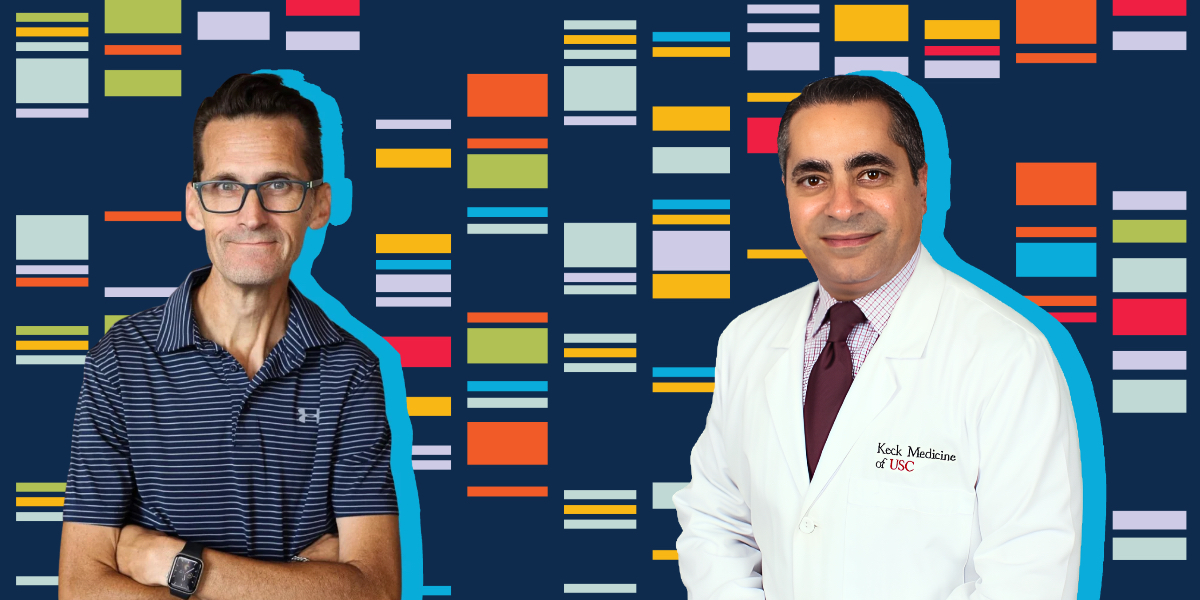
This summer, the Gastric Cancer Foundation and the University of Southern California (USC) posted a video on YouTube featuring Foundation board member and “Chef without a Stomach” Hans Rueffert. It was part of a research study called the Spreading Stories Pilot Project, an effort to demystify clinical trials that is being led by USC’s Southern California Clinical and Translational Science Institute. In the video, Rueffert tells the story of his gastric cancer diagnosis and treatment, and he urges patients to learn everything they can about their options—including whether they might benefit from enrolling in clinical trials of emerging treatments.
The video was one of two that USC and Gastric Cancer Foundation created as part of the project, which aims to determine the value of using video storytelling and social media to improve awareness of clinical trials. In the second video, USC oncologist and researcher Anthony El-Khoueiry, MD, offers advice to patients about how best to discuss their treatment options with their medical team, including how to discuss enrolling in clinical trials.
The collaboration between USC and Gastric Cancer Foundation was born from a mutual interest in determining best practices for educating patients about clinical trials. “The Foundation has a wonderful tool, the Clinical Trial Navigator, and we were interested in making sure people know it exists,” said Caitlin Sayegh, PhD, assistant professor of clinical pediatrics at USC Keck School of Medicine. “This study will allow us to quantitatively explore which types of posts are most effective and have the biggest reach.”
This pilot project is led by Allison Zumberge Orechwa, PhD, MBA and supported by the U.S. National Institutes of Health (NIH) National Center for Advancing Translational Sciences (NCATS). After the videos have been online for three months, the USC researchers plan to study how they were shared, the types of comments they generated, their effectiveness driving traffic to the Clinical Trial Navigator, and other factors that reflect how patients and caregivers view clinical trials.
“We will also be examining qualitatively the comments on the posts, so we can determine whether there are positive views of clinical trials being shared, or skeptical views, or maybe more surprising perspectives,” Sayegh said.
The goal of the USC research is to determine if social media outreach with video storytelling improves clinical trial recruitment, Sayegh said. “My hope is that anybody who is eligible for a clinical trial can learn about them in a timely way
and understand what is required to participate,” she said. “If we can recruit more participants into clinical trials, it could accelerate science and improve how representative the research is of all types of people across age, gender, ethnicity, and location.”


