
H. Pylori and Gastric Cancer: What to Know About this Common Gut Infection
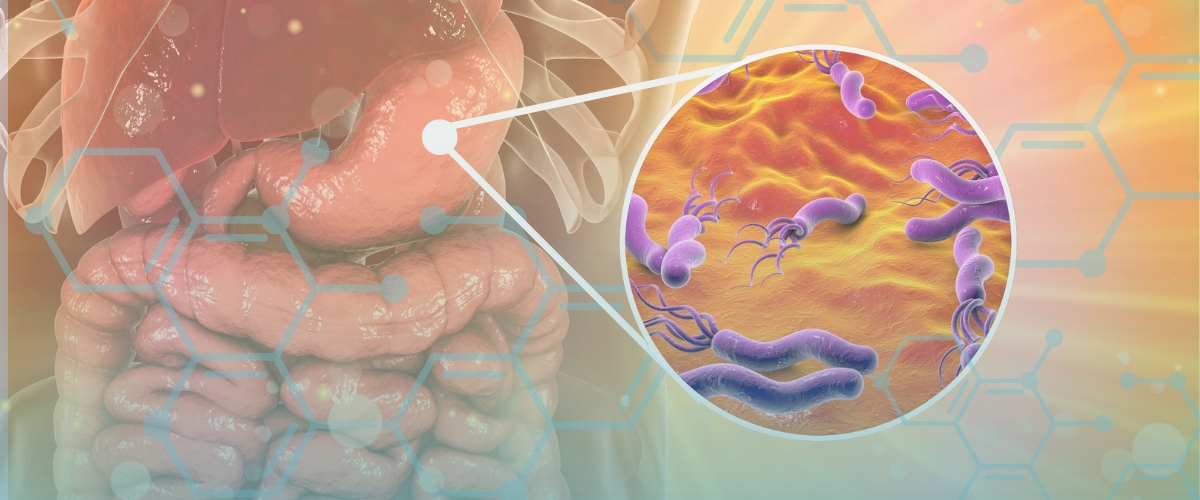
The bacterium Helicobacter pylori (H. pylori) commonly infects the stomach lining and is known to be a major risk factor for gastric cancer. An estimated half of the world’s population is infected with H. pylori, most of whom do not experience any symptoms. Yet treating the infection can reduce the risk of developing gastric cancer. In a study published recently in Nature Medicine, researchers in France estimated that 75% of the 15.6 million cases of gastric cancer projected to occur among individuals born between 2008 and 2017 could be prevented if H. pylori were eradicated.
It’s no wonder, then, that H. pylori is a major focus of gastric cancer researchers and public health experts around the globe. Scientists are seeking new insights into how the bacterium drives the development of gastric cancer, which could lead to novel diagnostic and therapeutic targets. At the same time, some public health officials are considering whether expanding H. pylori testing could reduce the incidence of gastric cancer.
The Gastric Cancer Foundation is an active participant in these efforts, helping to raise awareness of H. pylori and supporting scientists who are studying the bug and its connection to gastric cancer. For example, understanding H. pylori is one of the goals of the Gastric Cancer Registry at Stanford University, which the Foundation launched in 2011. The registry has collected more than 723 tissue samples from patients with gastric cancer and makes genomic data from them available to researchers worldwide. In 2023, the registry’s primary investigator, Hanlee Ji, MD, and his colleagues won a five-year, $9 million grant from the National Cancer Institute (NCI) for a project focused on understanding intestinal metaplasia, which can lead to gastric cancer. The effort includes H. pylori research.
H. pylori is also the focus of Zheng Chen, MD, PhD, who won a $100,000 seed grant from the Gastric Cancer Foundation in 2024. Dr. Chen, assistant professor of surgery at the University of Miami’s Miller School of Medicine, is focused on understanding the role of a protein signaling axis called WEE1-STAT3 in promoting the growth of gastric cancer. Dr. Chen made significant progress during his grant year, collecting evidence that blocking WEE1 might make gastric tumors more responsive to treatment and attracting further funding to continue his research.
Jose Saenz, MD, PhD, has also made major progress since jumpstarting his research into H. pylori with the help of the American Gastroenterology Association-Gastric Cancer Foundation Ben Feinstein Memorial Research Scholar Award, a three-year grant he was awarded in 2017. Dr. Saenz, assistant professor of medicine at Washington University, has gained insights into how H. pylori drives a reorganization of the stomach that can lead to cancer. His discoveries were noted by the American Society for Clinical Investigation, which recognized him with its Young Physician-Scientist Award in 2022.
When you support the Gastric Cancer Foundation, you help support cutting-edge research like this that enhances our understanding of gastric cancer and helps us advance novel ideas with the potential to translate into better treatments and prevention methods.
So who should get tested and treated for H. pylori? This question remains a major topic of discussion in the gastric cancer community. In 2024, the American College of Gastroenterology (ACG) issued updated guidelines suggesting that testing and treatment is appropriate for people who face a high risk of gastric cancer. This includes people with a history of peptic ulcer disease, unexplained iron deficiencies or gastric precancers. First-degree relatives of gastric cancer patients could also benefit from testing and treatment. Recent advances in testing technology allow clinicians to identify the antibiotic treatments that are most likely to be effective in individual patients, the researchers noted.
Learn more about H. pylori and other gastric cancer risk factors >>


