
Gastric Cancer Foundation Awards Two $100,000 Seed Grants to Fuel Novel Drug and Genomic Studies
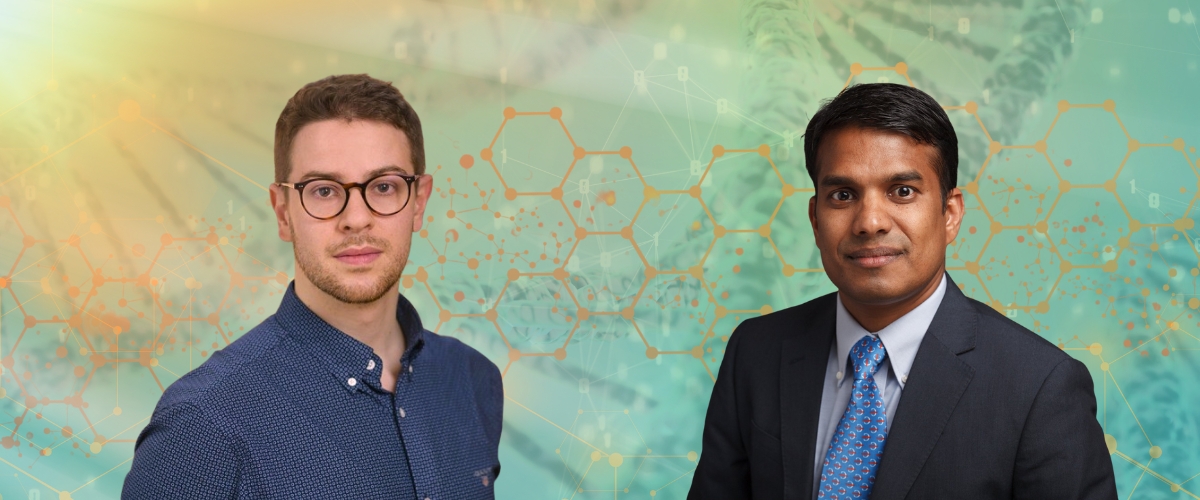
The Gastric Cancer Foundation is proud to introduce our two newest seed grant recipients, who were each awarded $100,000 in funding for their foundational research. Pradeep Chaluvally-Raghavan, PhD, associate professor at the Medical College of Wisconsin, is developing a novel, two-pronged drug that inhibits a cancer-promoting protein. Ignacio Vázquez-García, PhD, a recently recruited assistant professor at Harvard Medical School and Massachusetts General Hospital, is studying a genetic abnormality that affects a large proportion of patients.
Our seed grant program helps bridge a funding gap that faces many gastric cancer researchers in the early and mid-stages of their careers. By supporting basic research, we aim to provide researchers the backing they need to gather data they can use to apply for larger grants. Ultimately, their research could bring novel diagnostics and treatments to patients facing this challenging diagnosis.
More about our 2026 seed grant recipients:
 Pradeep Chaluvally-Raghavan, PhD
Therapies known as antibody-drug conjugates (ADCs) can be quite effective in combating tumors because they combine cancer-killing medicines with molecules designed to block mechanisms in cancer cells that allow them to grow and thrive. Chaluvally-Raghavan is developing an ADC that targets stomach tumors in a completely new way.
Chaluvally-Raghavan’s research is focused on oncostatin M receptor (OSMR), a protein that’s known to activate signals in cancer cells that help them to grow, proliferate quickly and spread beyond the primary tumor. His Gastric Cancer Foundation-funded project centers around developing an effective ADC to inhibit OSMR.
At Medical College of Wisconsin, Chaluvally-Raghavan holds research appointments in obstetrics and gynecology and physiology. He and his colleagues have published research demonstrating the potential of inhibiting OSMR to treat ovarian cancer. In gastric cancer, high levels of OSMR observed in higher-grade and later-stage patients portend particularly bad outcomes. That gave Chaluvally-Raghavan’s team a strong motivation to extend OSMR therapy beyond gynecologic oncology, he said. “We know this protein activates cancerous mechanisms in multiple solid tumor types, but based on the data we’ve seen, we believe our drug could have a particularly strong impact in gastric cancer,” Chaluvally-Raghavan said.
With the funding from Gastric Cancer Foundation, Chaluvally-Raghavan’s lab will pursue two main goals. The first is to develop an ADC that combines a novel anti-OSMR antibody with a cancer-killing drug called monomethyl auristatin E (MMAE), which is a commonly used element of FDA-approved ADCs to treat many cancers. The second is to test the effectiveness of the experimental drug in tumor cells, three-dimensional models and animal models of gastric cancer.
Chaluvally-Raghavan hopes the data he generates will help attract federal grant support. It could also draw the attention of pharmaceutical partners that could fund further development of the drug, he said.
Chaluvally-Raghavan was educated in India, where he received his PhD at the University of Calicut. He completed his post-doctoral training at the Weizmann Institute and University of Texas MD Anderson Cancer Center before joining Medical College of Wisconsin in 2016.
He says he appreciates the Gastric Cancer Foundation’s efforts to support projects like his that are aimed at expanding the treatment landscape for patients facing such a challenging diagnosis:
“I’m very grateful for the generous support and trust in our research. In the current environment, federal funding is very difficult to get, so this grant will be essential for developing strong preliminary data that would help us to attract big funding mechanisms and take our project to the next level.”
 Ignacio Vázquez-García, PhD
Gastric cancer remains one of the most lethal cancers worldwide, in part because tumors evolve as they grow, developing pockets of cells that resist treatment. Understanding how and when these resistant cells emerge is the focus of Vázquez-García’s research initiative at Massachusetts General Hospital (MGH) and Harvard Medical School (HMS)—the first peer-reviewed grant awarded to Vázquez-García’s brand-new lab.
The funding provides critical support to jump-start Vázquez-García’s plan to use advanced single-cell technologies to uncover how gastric tumors evolve and become resistant to treatment. “As a new lab, early support like this is catalytic,” said Vázquez-García. “This will allow us to deploy cutting-edge technologies to study tumors one cell at a time. Our aim is to reveal the earliest events that drive treatment failure and translate those insights into better, more durable responses for patients.”
Specifically, Vázquez-García is studying a phenomenon called “chromosomal instability” (CIN), in which the chromosomes of gastric tumors become rearranged. CIN results in extensive cell-to-cell diversity within the tumor, resulting in cancer cells that are highly heterogeneous and often resistant to treatment. An estimated 40% to 60% of gastric tumors have high levels of CIN, yet the consequences of this instability remain poorly understood.
Working in close collaboration with former AGA-Gastric Cancer Foundation Research Scholar Samuel Klempner, MD, and Steven Blum, MD, at MGH, Vázquez-García and his team will use single-cell genome sequencing technologies to study cells from newly diagnosed gastric and esophageal cancer patients. As a first goal, the team will use these profiles to identify mutations that are unique to individual cells. By reconstructing how individual cancer lineages evolve using these mutations and identifying mutational processes over time, the researchers aim to identify early warning signs of resistance.
Their second goal is to apply single-cell whole genome sequencing to samples from 20 of the patients after they have been treated, in order to determine how CIN affects therapy response and define which malignant cells survive. Vázquez-García said the ability to probe single cells could drive new insights into how some patients become resistant to therapies, including immunotherapies and drugs that target specific tumor mutations. His lab’s findings have the potential to inspire new treatment strategies aimed at combating resistance, he added.
Before joining Harvard’s faculty, Vázquez-García earned a master of science in physics from Imperial College London and a PhD in mathematical genomics and medicine from the University of Cambridge and the Wellcome Sanger Institute. He did his post-doctoral research at Columbia University and Memorial Sloan Kettering Cancer Center, specializing in computational oncology.
Vázquez-García is grateful to the Gastric Cancer Foundation—and he has a message for all of its donors:
“Thank you for your support. You are enabling us to think big and apply exciting new tools that will improve our understanding of gastric cancer, which could ultimately guide more effective therapies. With this seed funding, we are taking on questions that are high-risk but have high potential benefit for patients. Your support empowers bold ideas to happen and to redefine what’s possible.”


